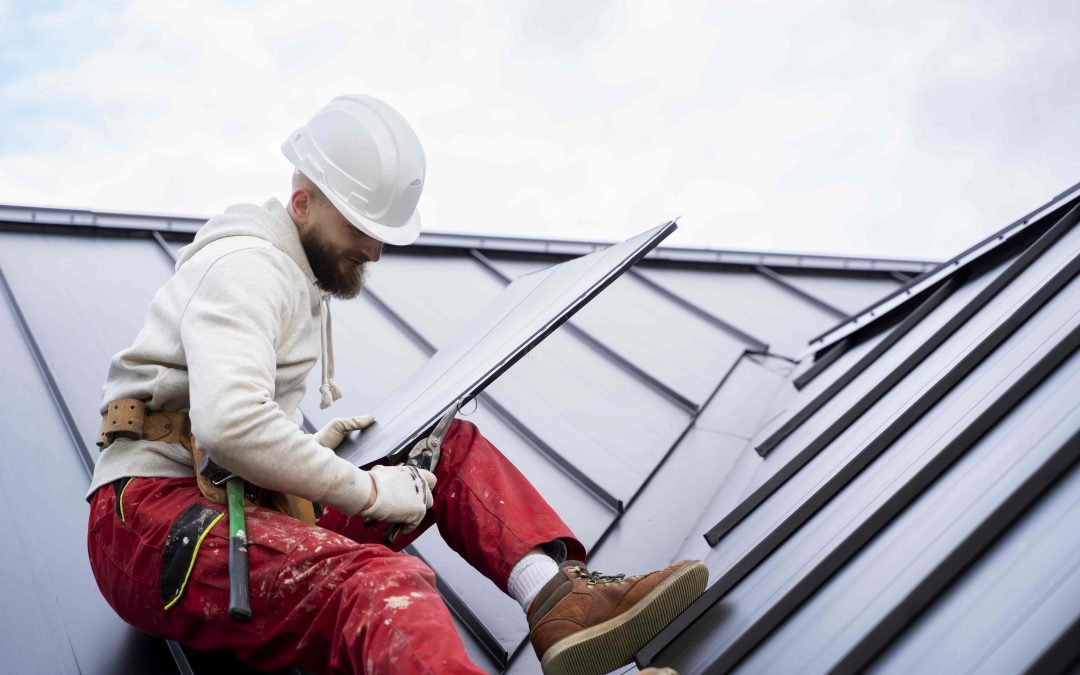
Urgent roofing failures across Greater Manchester demand rapid containment to prevent structural timber decay, ceiling collapse, and penetrating damp. Professional emergency roof repair in Manchester should include immediate leak isolation, wind-uplift stabilization compliant with British Standards Institution BS 5534 guidance, and Manchester Building Control-compliant structural safeguarding.
Across Manchester, exposed roof systems face intense rainfall, turbulent crosswinds, and severe pressure fluctuations generated by Atlantic storm fronts crossing the Cheshire Plain before colliding with the Pennine uplands. From Victorian terraces in M14 to commercial units in Salford Quays and detached properties in Trafford, emergency roofing defects escalate quickly when left untreated.
At All Guard Roofing, our rapid-response teams provide 24/7 emergency roof repair Manchester property owners can depend on for immediate structural containment, leak suppression, and long-term weatherproof reinstatement.
Why Manchester Roofs Fail During Severe Atlantic Storm Fronts
Greater Manchester’s roofing infrastructure experiences one of the UK’s most demanding urban microclimates. Moist Atlantic air accelerates eastward across the Cheshire Plain before striking elevated Pennine terrain, creating:
-
Sudden wind uplift pressure
-
Driving horizontal rainfall
-
Repetitive freeze-thaw saturation cycles
-
Turbulent roof-edge suction forces
-
High moisture retention within older roof assemblies
These conditions particularly affect traditional roofing systems throughout:
-
M1 & Northern Quarter terraces
-
M20 Didsbury properties
-
M33 Sale and Altrincham homes
-
Salford commercial flat roofs
-
Stockport slate roof housing stock
-
Trafford semi-detached estates
-
Bury heritage buildings
Wind-Uplift Failure Mechanisms Under BS 5534
Under BS 5534 roofing standards guidance, pitched roofing systems must resist negative pressure uplift generated when strong winds accelerate across ridge and verge zones.
Traditional Manchester roofs commonly fail through a progressive chain of storm-related structural stress. Atlantic storm gusts create negative pressure along the leeward side of pitched roofs, placing aging ridge mortar and fixings under intense strain. As mortar joints weaken and fatigue develops, slates or tiles begin to detach from the roof covering. Once exposed gaps form, driven rain penetrates beneath the surface layer and saturates the underlay, battens, and rafters below. Over time, this moisture intrusion can lead to structural timber decay, ceiling damage, insulation failure, and internal damp problems.
Older Welsh Blue Slate systems are especially vulnerable due to historic ferrous nail corrosion, commonly known as “nail sickness.”
Traditional Welsh Slate Vulnerabilities Across Greater Manchester
Many Edwardian and Victorian properties throughout Didsbury, Chorlton, Sale, and Altrincham still retain original Welsh Blue Slate roofing systems installed over a century ago.
Although Welsh slate itself remains exceptionally durable, the original iron fixings deteriorate through decades of damp atmospheric exposure.
Common emergency failures include:
-
Slipped slates during high winds
-
Ridge line displacement
-
Water ingress beneath underfelt
-
Rotten roofing battens
-
Rafter-end saturation
-
Lead valley separation
-
Chimney flashing failure
Our emergency teams install:
-
Stainless steel slate hooks
-
Temporary structural bracing
-
Heavy-duty polymer sheeting
-
Copper nail refix systems
-
Breathable underlay membranes
-
Reinforced ridge containment
This allows damaged roofs to remain weather-resistant even during active storm conditions.
24/7 Manchester Urgent Roofers for Domestic & Commercial Properties
We provide emergency roof repair callouts across:
-
M1
-
M2
-
M4
-
M14
-
M20
-
M33
-
M50
Including:
-
Salford
-
Stockport
-
Trafford
-
Sale
-
Altrincham
-
Bury
Emergency Services Include
-
Storm damage roof repair M1
-
Commercial roof patch Salford
-
Structural roof containment Stockport
-
Welsh slate replacement Trafford
-
Emergency flat roof sealing
-
Ridge tile stabilization
-
Chimney flashing repair
-
Ceiling leak isolation
-
Temporary industrial tarpaulin containment
-
Structural timber bracing
Manchester City Council Building Regulations & Emergency Roofing Compliance
Urgent roof repairs frequently involve structural safety obligations under Manchester City Council Building Control.
Minor emergency maintenance works are generally exempt from formal approval requirements when repairs involve:
-
Isolated slate replacement
-
Localized flashing repair
-
Temporary containment measures
-
Emergency leak suppression
However, where more than 25% of the roof covering is replaced, current Building Regulations require formal notification.
The 25% Roof Replacement Threshold
Under national Building Regulations enforcement guidance:
Roof repairs affecting less than 25% of the total roof area are generally classified as emergency maintenance and are usually exempt from formal Building Control applications. However, when emergency works exceed 25% of the roof envelope, a Building Notice must normally be submitted to comply with current structural and thermal performance regulations.
Emergency structural works may proceed immediately where public safety or weather protection is necessary, but documentation must subsequently be submitted to Building Control.
Relevant guidance can be reviewed via:
Where thermal upgrades become necessary, current standards typically require loft insulation performance near:
U = 0.18\ W/m^2K
All Guard Roofing manages compliance documentation while ensuring urgent containment work proceeds without delay.
Structural Performance Analysis of Manchester Roofing Systems
| Roofing System | Common Failure Mode | Wind Resistance | Water Resistance | Emergency Containment Method | Expected Lifespan |
|---|---|---|---|---|---|
| Natural Welsh Slate | Nail sickness & slate slip | High with mechanical fixings | Exceptional | Slate hooks & industrial sheeting | 80+ years |
| Concrete Interlocking Tiles | Ridge mortar fatigue | Moderate | High runoff | Structural compound sealing | 50–60 years |
| EPDM Flat Roofing | Edge delamination | Exceptional | Fully waterproof | Liquid polymer patching | 30+ years |
| Traditional Felt Roofs | Seam splitting | Low | Moderate | Torchless emergency membranes | 15–20 years |
Rapid Emergency Engineering & Structural Containment
1. Structural Timber Bracing
Where storm damage compromises roof rafters or trusses, immediate stabilization becomes critical.
Our teams install:
-
Internal timber props
-
Rafter reinforcement systems
-
Load-distribution bracing
-
Ceiling collapse prevention supports
This prevents progressive movement while permanent repairs are designed.
2. Industrial Tarpaulin & Polymer Waterproofing Systems
During active rainfall, traditional mortar and hot-bitumen systems cannot cure safely.
Instead, we deploy:
Heavy-Duty Storm Covers
UV-stabilized industrial tarpaulins are mechanically secured using treated timber battens to withstand severe wind loading.
Cold-Applied Liquid Polymers
Ideal for commercial roof patch Salford projects and Trafford industrial units, these reinforced sealants adhere directly to wet substrates.
This allows leaks to be stopped immediately regardless of weather conditions.
3. Precision Lead Flashing & Valley Repairs
Manchester’s persistent driving rain places enormous stress on:
-
Chimney abutments
-
Roof valleys
-
Lead flashings
-
Step flashing junctions
Emergency lead repair systems include:
-
Lead welding
-
Patination oil treatment
-
Structural sealant injection
-
Valley tray replacement
-
Chimney breast waterproofing
The All Guard Emergency Roof Stabilization System
The All Guard emergency roof stabilization system is designed as a layered protection structure that restores weather resistance while preserving long-term roof ventilation and structural integrity. The external slate or tile layer forms the first defense against rainfall and wind uplift, while mechanical stainless steel fixings secure all surface materials against storm pressure. Beneath this sits a vapour-permeable roofing membrane that prevents external moisture ingress while allowing trapped internal moisture to escape safely.
Treated counter battens create a continuous ventilation cavity to reduce condensation build-up within the roof structure. Reinforced structural timber rafters then stabilize the roof framework and distribute structural loads safely across the property. Internally, insulation layers and ceiling systems remain protected from penetrating damp and long-term moisture damage.
Many low-grade emergency contractors merely overlay damaged sections with scrap felt, trapping moisture inside the roof structure and accelerating timber rot.
Our engineered system follows modern roofing science principles to ensure:
-
Ventilation continuity
-
Condensation control
-
Structural load distribution
-
Long-term moisture resistance
-
BS 5534 mechanical compliance
The All Guard Seven-Step Emergency Response Framework
Step 1 — 24/7 Dispatch & Threat Assessment
Rapid-response coordinators assess storm severity and deploy emergency structural crews immediately.
Step 2 — Safe Roof Access Installation
Secure ladder systems and edge protection platforms are installed to comply with safe working standards.
Step 3 — Debris Removal & Surface Preparation
Broken slates, fractured mortar, and failed membranes are safely removed.
Step 4 — Structural Timber Reinforcement
Internal rafters and trusses are assessed and stabilized using structural timber supports.
Step 5 — Vapour-Permeable Underlay Installation
Modern breathable membranes are installed to prevent moisture entrapment.
Step 6 — Treated Batten Installation
Rotten battens are replaced using pressure-treated structural timber.
Step 7 — Mechanical Fixing & Final Inspection
Replacement slates and tiles are mechanically secured with copper nails and steel clips before final storm-resistance inspection.
Emergency Roof Repair Manchester FAQs
What qualifies as a roofing emergency?
A roofing emergency includes any defect causing immediate water penetration, structural instability, or public safety risk. This includes major leaks, storm-damaged slates, collapsed ridge sections, chimney impact damage, and flat roof membrane failures.
How quickly can emergency roofers arrive in Manchester?
Our Manchester urgent roofers aim to attend emergency callouts within approximately two hours depending on weather conditions, traffic flow, and operational demand across Greater Manchester.
Can emergency roof repairs be completed during heavy rain?
Yes. While permanent mortar applications may require dry conditions, temporary containment systems including industrial sheeting and cold-applied liquid polymers can be installed safely during active rainfall.
What is nail sickness in Welsh slate roofs?
Nail sickness occurs when original ferrous slate fixings corrode over time, causing slates to detach and slip from alignment. This is particularly common on historic Manchester terraces exposed to persistent damp conditions.
Does insurance cover emergency storm damage roof repairs?
Most UK building insurance policies cover sudden storm-related roofing failures. We provide:
-
Photographic reports
-
Structural assessments
-
Itemized repair documentation
-
Insurance-support quotations
to help support claims processing.
Do I need Building Control approval for emergency roof works?
Minor maintenance repairs are generally exempt. However, structural replacements exceeding 25% of the roof area require notification under current Building Regulations guidance.
Specialist Roofing Solutions Across Greater Manchester
Domestic Roofing
-
Slate replacement
-
Tile roof repairs
-
Leak tracing
-
Chimney flashing repair
-
Emergency ridge stabilization
Commercial Roofing
-
EPDM flat roof systems
-
GRP fiberglass roofing
-
Liquid rubber waterproofing
-
Industrial roof containment
-
Warehouse leak suppression
Heritage & Conservation Roofing
-
Welsh slate conservation
-
Heritage mortar matching
-
Traditional leadwork
-
Victorian roof restoration
-
Conservation-area roofing compliance
Sustainable Drainage & Long-Term Water Management
Manchester’s increasingly intense rainfall events require modern drainage consideration alongside emergency roofing interventions.
Surface water management guidance can be reviewed via:
Improper drainage frequently contributes to:
-
Overflowing valleys
-
Soffit saturation
-
Fascia decay
-
Gutter backflow
-
Penetrating damp formation
Contact All Guard Roofing — 24/7 Emergency Roof Repair Manchester
For rapid-response emergency roof repair Manchester property owners trust across residential, commercial, and heritage buildings, contact:All Guard Roofing
We provide immediate structural containment, storm damage stabilization, and fully compliant emergency roofing solutions throughout Greater Manchester.