
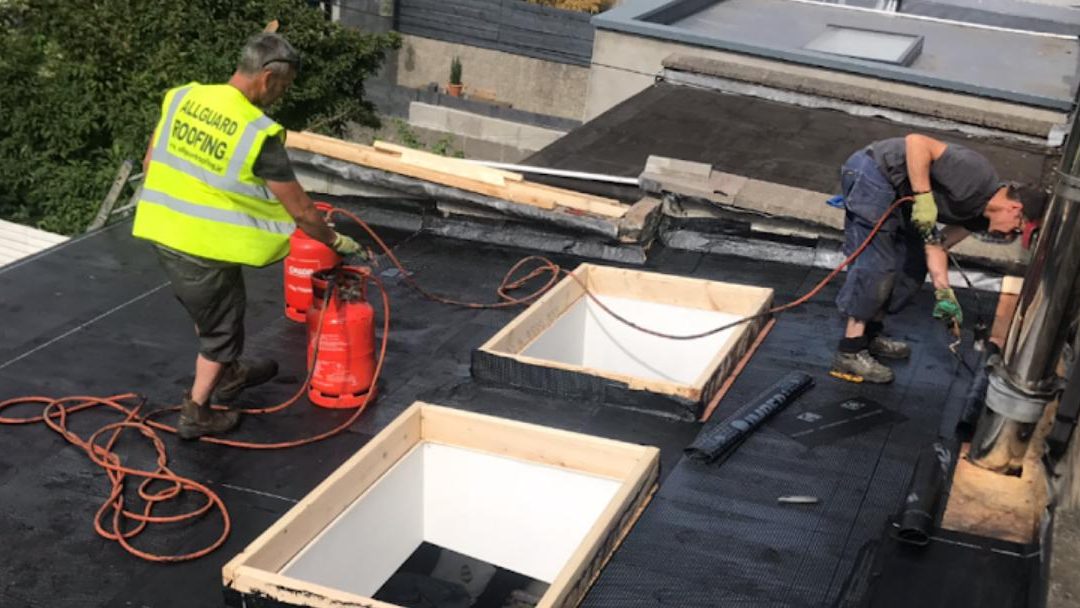
All Guard Roofing is Stockport’s high quality structural roofing specialist, delivering certified leak diagnostics, historic slate restoration, and flat roof repairs. Operating fully under BS 5534 and BS 8612, we secure properties across Edgeley, Bramhall, Heaton Moor, Cheadle, and Marple, ensuring full compliance with Part L Building Regulations.
The Meteorological Reality of Stockport Roofing
Positioned beneath the iconic Stockport Viaduct and along the busy A6 road corridor, Stockport sits at the confluence of the River Tame and River Goyt, forming the River Mersey. This basin geography, combined with prevailing westerly winds and proximity to the Pennines, creates a moisture-heavy microclimate.
This results in:
- persistent wind-driven rain
- elevated humidity levels
- prolonged damp exposure
- aggressive freeze–thaw cycles
These environmental factors accelerate roof deterioration across suburbs like Marple Bridge, Bramhall, and Heaton Moor.
Common Structural Failures in Stockport Roofs
Moss Saturation and Tile Degradation
Leafy suburbs such as Bramhall and Cheadle Hulme experience heavy moss colonisation. Moss retains water, leading to:
- tile surface spalling
- cracked edges
- broken fixing nibs
- tile displacement
Condensation and Timber Rot
Victorian terraces in Edgeley and Portwood were designed to ventilate naturally. Modern insulation upgrades often block airflow, causing condensation to form on rafters.
This leads to wet rot caused by Coniophora puteana, weakening structural timbers.
Our BS 5250-Compliant Solution
We follow condensation control best practices aligned with National Federation of Roofing Contractors (NFRC) and install:
- breathable membranes
- soffit ventilation systems
- ridge ventilation
- airflow pathways
This ensures compliance with BS 5250 and protects long-term structural integrity.
Conservation Areas & Article 4 Directions in Stockport
Stockport Metropolitan Borough Council manages 37 Conservation Areas, many of which fall under strict Article 4 Directions.
For official planning and conservation guidance, we align with:
Areas Affected Include:
- Heaton Moor
- Marple Bridge
- Cheadle
What Article 4 Means
You must obtain planning permission before:
- replacing Welsh slate with concrete tiles
- altering ridge or verge detailing
- modifying chimney stacks
- changing roof appearance facing public highways
Our Conservation Approach
We specialise in:
- reclaimed Welsh slate sourcing
- lime mortar chimney repointing
- heritage-compliant ridge detailing
- planning application support
This ensures your roof remains legally compliant and architecturally authentic.
Structural Load Compliance: Slate to Tile Conversions
Switching from slate to concrete tiles introduces a significant structural load increase.
Load Comparison
- Welsh slate: ~35 kg/m²
- Concrete tiles: ~55 kg/m²
This exceeds the 15% threshold under Building Regulations Part A.
Our Engineering Process
We:
- calculate load increases
- reinforce rafters using C24 timber
- install additional purlins if required
- submit documentation to Building Control
This prevents long-term sagging and structural failure.
Part L Compliance: The 50% Roof Renovation Rule
If more than half your roof is repaired or replaced, insulation upgrades become mandatory.
For regulatory alignment, we follow:
- Planning Portal UK
- local enforcement guidance from Stockport Council
Required Thermal Performance
U \le 0.16\ \mathrm{W/m^2K}
This applies to pitched roofs under Approved Document L.
Installation Methods
We install:
- PIR insulation boards (Kingspan, Celotex)
- mineral wool systems
- warm roof constructions
- cold roof loft insulation
This ensures legal compliance and reduces heat loss significantly.
BS 5534 & BS 8612: Modern Roofing Standards
We strictly adhere to:
- BS 5534 – Slating and tiling installation standards
- BS 8612 – Dry-fix ridge and verge systems
Why Dry-Fix Systems Matter
Traditional mortar fails due to:
- thermal expansion
- wind uplift
- moisture ingress
Dry-fix systems offer:
- mechanical fixing
- ventilation compliance
- zero cracking
- long-term durability
Roofing Materials for Stockport Homes
Welsh Slate
Best for conservation areas like Heaton Moor and Marple Bridge.
- lifespan: 100+ years
- lightweight
- heritage compliant
Concrete Tiles
Common in Bramhall and newer estates.
- lifespan: 50–60 years
- heavy load
- cost-effective
Clay Tiles
Used in Hazel Grove and Offerton.
- durable
- aesthetically traditional
GRP & EPDM Flat Roofs
Ideal for extensions across SK1–SK8.
- seamless waterproofing
- 30–40 year lifespan
- minimal maintenance
Specialist Roof Repair Services in Stockport
Flat Roofing Repairs (GRP & EPDM)
We install seamless flat roofing systems ideal for garages, dormers, and extensions.
Lead Flashing & Chimney Repairs
We install Code 4 and Code 5 leadwork to prevent water ingress at junctions.
Dry Ridge & Verge Conversions
We upgrade failing mortar systems to BS 8612-compliant dry-fix solutions.
Local Coverage Across Stockport
We serve:
- SK1–SK3: Edgeley, Portwood, Davenport
- SK4: Heaton Moor, Heaton Chapel
- SK6: Marple Bridge, Romiley
- SK7: Bramhall, Hazel Grove
- SK8: Cheadle, Gatley
FAQs: Roof Repair in Stockport
How much does roof repair cost?
- minor repairs: £150–£450
- larger repairs: £800–£2,500
Do I need planning permission?
Yes, in conservation areas with Article 4 Directions.
What is the Part L rule?
If over 50% of your roof is replaced, insulation must meet legal standards.
Why is my chimney damp?
Likely causes include hygroscopic salts or failing lead flashing.
How long do flat roofs last?
GRP and EPDM systems typically last 30–40 years.
Book Your Stockport Roof Repair Survey
Whether you need emergency roof repair in Edgeley, slate restoration in Heaton Moor, or a flat roof upgrade in Bramhall, All Guard Roofing delivers fully compliant, long-lasting roofing solutions.
We combine:
- BS 5534 workmanship
- BS 8612 dry-fix systems
- Part L compliance
- conservation expertise
- structural engineering precision
Contact All Guard Roofing today to arrange your free structural roof survey in Stockport.