
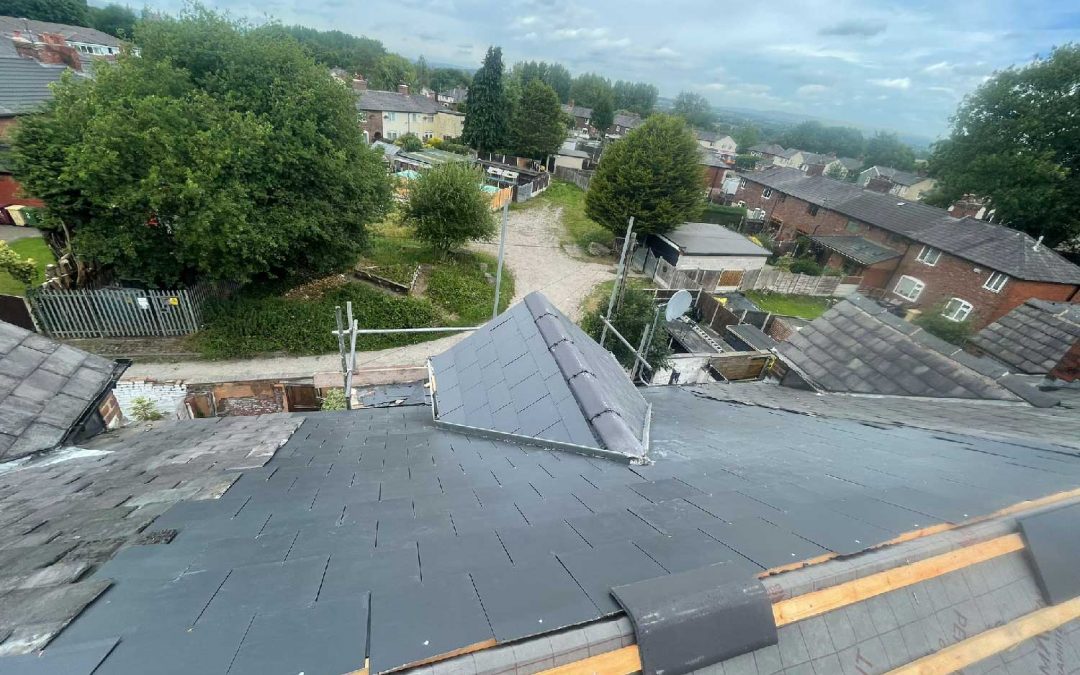
Manchester roofs live a hard life. The mix of frequent rain, gusty wind, shade from trees and long damp spells creates the perfect conditions for blocked gutters, slipped tiles, hidden leaks, and moss growth—especially on older properties and extensions with flat roofs.
This calendar gives you a simple monthly routine to help you stay ahead of problems (and avoid the bigger bills that come from leaving small issues too long).
Safety first: you can do most checks from the ground with binoculars and a torch in the loft. Avoid walking on the roof—leave that to a qualified roofer.
Quick “Roof MOT” tools (no roof climbing needed)
- Binoculars (spot slipped tiles, cracked pointing, moss build-up)
- Torch (loft checks for damp, mould, daylight through felt)
- Phone camera (zoom photos of gutters, flashings, chimney stacks)
- A dry day (inspections are easier when everything isn’t soaking)
The golden rule for Manchester weather
Do these 3 things all year:
- Keep gutters and downpipes clear (rain + leaves = overflows).
- Check after wind (ridge tiles, verge caps and flashing can shift).
- Control moss early (moss holds moisture and encourages deterioration).
Month-by-month roof maintenance checklist
January — Storm and leak watch
- Check for missing/slipped tiles after windy nights.
- Look for gutter sagging or overflowing joints.
- In the loft: check for fresh damp patches on rafters and felt.
- Make sure downpipes aren’t blocked or frozen.
Call a roofer if: you notice a new ceiling stain or dripping during heavy rain.
February — Condensation and ventilation check
- In the loft: watch for condensation droplets, mould, or a musty smell.
- Check bathroom and kitchen extractor vents actually vent outside (not into loft).
- Look for cold spots and insulation gaps (damp + poor airflow is a common combo).
Tip: Many “roof leaks” in winter are actually condensation issues.
March — Spring clean (gutters, valleys, roofline)
- Clear leftover debris from gutters and roof valleys.
- Check fascias/soffits for peeling paint, staining, or rot.
- Look for mortar cracks on ridge tiles and around the chimney.
Best time to book: a spring inspection before trades get busy.
April — Flat roof and seal inspection
If you have a flat roof (extension, garage, dormer):
- Check for standing water (ponding) 24–48 hours after rain.
- Look for splits, blisters or lifted edges on the covering.
- Check seals around rooflights and junctions.
Call a roofer if: ponding is persistent or you see bubbling on the surface.
May — Birds, nesting, and roofline gaps
- Check for birds entering the eaves (especially under tiles).
- Watch for new gaps near soffits, broken vents, or lifted felt.
- Look for early signs of moss thickening on shaded slopes.
Note: Avoid disturbing active nests—get advice if you’re unsure.
June — Small repairs, big savings
- Check ridge and hip lines (wind exposure shows up here first).
- Inspect leadwork/flashings visually: look for lifting, splits, or gaps.
- Check gutter joints and brackets before summer downpours.
Good month for: minor repairs while weather is steadier.
July — Chimney stack and brickwork
- Inspect chimney stack from ground: cracks, leaning, missing pots/cowls.
- Look for staining on brickwork (often a clue water is tracking in).
- Check mortar fillets/flashings where the chimney meets the roof.
Call a roofer if: you see loose masonry or pieces of mortar in the garden.
August — Plan major works (best weather window)
- Consider upgrades: dry ridge/dry verge, better ventilation, or insulation improvements.
- Book bigger jobs: partial re-roofs, flat roof replacements, chimney rebuilds.
- If you’ve had recurring issues, request a full roof survey.
Why now: longer dry spells help repairs cure properly.
September — Pre-autumn prep
- Clear gutters and downpipes before leaf fall kicks in.
- Check valleys and behind chimneys (leaf traps = hidden overflow routes).
- Trim back overhanging branches (reduces moss and debris).
Manchester special: autumn blockages are one of the biggest drivers of “mystery leaks”.
October — Leaf fall and overflow checks
- Check gutters every couple of weeks if you’re near trees.
- During rainfall, look for water spilling over gutter edges.
- Check ground around downpipes for pooling (sign of a blockage).
Quick fix: catching overflow early prevents damp patches and brick staining.
November — Wind readiness
- Inspect ridge lines and verges after gusty days.
- Listen for new rattles (loose gutters, flashing, soffit panels).
- In the loft: check for any new daylight or wet insulation.
Call a roofer if: you suspect ridge movement—this can escalate quickly in storms.
December — Winter protection mode
- Do a quick visual check after each major storm.
- Keep gutters clear to reduce ice build-up and overflow.
- Make sure you know who to call for emergency roofing if needed.
Tip: Take a few photos now—useful for comparing changes after bad weather.
Moss management (the Manchester way)
Moss is common here because damp + shade lets it thrive. But removal needs care.
Do:
- Remove heavy clumps gently (ground observation + professional cleaning if needed).
- Consider a soft treatment to slow regrowth.
- Keep gutters clear—moss often ends up blocking them.
Don’t:
- Pressure wash roof tiles (it can strip protective surfaces and force water under tiles).
- Scrape aggressively yourself—tiles can crack, and working at height is risky.
After any storm: 5-minute ground check
- Any new tiles/slate pieces on the ground?
- Gutter hanging or bowing?
- New staining on ceilings or upstairs walls?
- Dripping/overflow at one corner of the house?
- Debris piled in a valley or behind the chimney?
If you tick any of these, it’s worth getting it checked before the next rainfall.
What you can DIY vs what to leave to a roofer
DIY (from ground/inside):
- Visual inspections with binoculars
- Loft checks for damp/condensation
- Monitoring gutter overflow during rain
Roofer recommended:
- Re-bedding ridge tiles / verge repairs
- Lead flashing repairs
- Flat roof patching or replacement
- Moss removal/treatment on steep pitches
- Any work involving ladders/scaffolding
Final thoughts
A roof doesn’t usually fail overnight—most big problems start as small, fixable issues: a slipped tile after wind, a blocked downpipe, or moss pushing water where it shouldn’t go. With Manchester’s weather, a little monthly routine is often the difference between a quick repair and a costly internal damp job.