Storms can cause serious damage to a roof in a matter of minutes. One night of strong wind and heavy rain can leave you with slipped tiles, blocked gutters, water coming through the ceiling, or even damage to a commercial roofing system. For homeowners and business owners alike, the first few steps matter.
If you are dealing with storm damage, it is important to stay calm, act safely, and arrange the right roof repair in Manchester as soon as possible. Quick action helps prevent a small issue turning into a much bigger and more expensive one.
Why storm damage should never be ignored
After a storm, some roof problems are easy to spot. Others are less obvious. A tile may have shifted only slightly, flashing may have loosened around the chimney, or water may be getting in through a flat roof seam without showing much from the outside.
The problem is that even minor damage can get worse fast. Rainwater can work its way into the roof structure, insulation, ceilings, and internal walls. In commercial properties, damage can also affect stock, office equipment, and day-to-day operations.
That is why storm-related roofing issues should always be checked properly, even if the damage looks small at first.
What to do first after storm damage
1. Put safety first
Before anything else, make sure everyone in the property is safe. Do not go onto the roof yourself, especially if tiles are loose, surfaces are wet, or there is debris around the building. Storm-damaged roofs can be unstable, and climbing up without the right training and equipment is dangerous.
If you notice water coming in indoors, move furniture, electronics, documents, or stock away from the affected area if it is safe to do so. Put buckets or containers under active leaks to reduce water damage.
For commercial buildings, consider whether any part of the premises needs to be temporarily closed off until the area is made safe.
2. Check for visible signs of damage from ground level
You do not need to climb onto the roof to spot common storm damage. Walk around the property and look from a safe distance for signs such as:
- slipped, cracked, or missing roof tiles
- ridge tiles that look loose or uneven
- damaged flashing around chimneys or roof edges
- sagging guttering
- fallen debris on the roof
- standing water on a flat roof
- pieces of roofing material on the ground
Inside the property, watch out for damp patches, staining on ceilings, peeling paint, mould growth, or a sudden draught in the loft or upper floor.
3. Take clear photos
If it is safe to do so, take photos of the damage from the ground and also photograph any internal signs such as leaks or ceiling stains. This can be useful for insurance purposes and also helps a roofing contractor understand the issue before attending.
For commercial premises, it is worth documenting anything that could affect operations, such as damage above storage areas, workspaces, or entrance points.
4. Arrange professional roof inspection and repair quickly
Once you suspect storm damage, contact a trusted roofer as soon as possible. Delaying repairs can lead to further water ingress, rotten timber, damaged insulation, and higher repair costs later on.
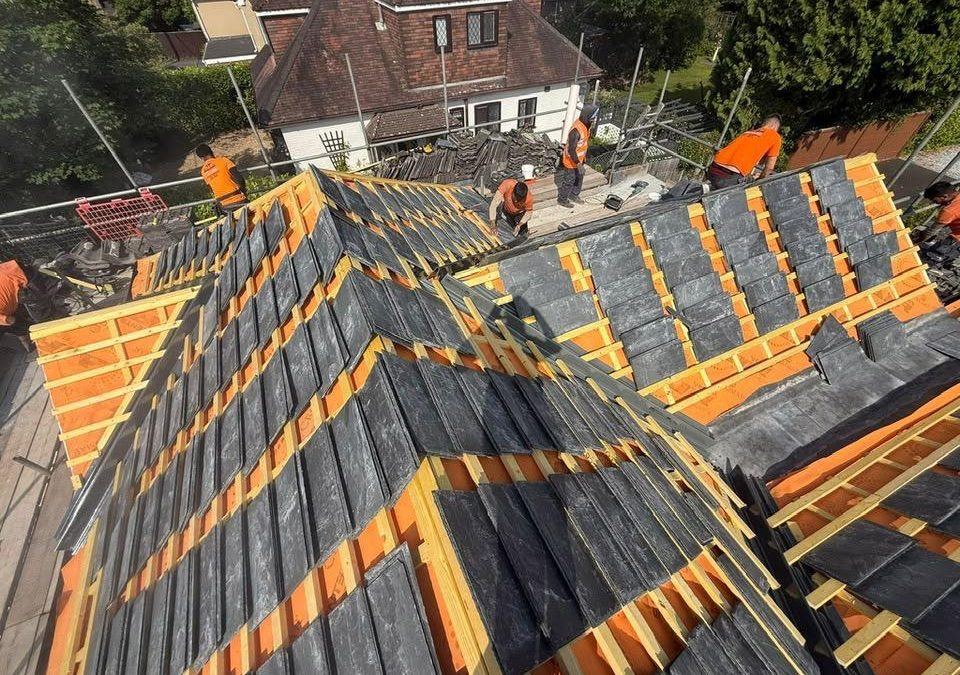
A professional team can assess the damage properly, identify the source of the problem, and recommend the right fix. In some cases, the issue may only need a targeted repair. In others, there may be wider damage to the roof covering, roofline, flat roof membrane, or chimney area.
If the damage is severe, emergency make-safe work may be needed first to protect the property until full repairs can be completed.
Common types of storm damage on roofs in Manchester
Manchester weather can be tough on roofs, especially during periods of high wind and heavy rain. Some of the most common storm-related roofing issues include:
Missing or slipped tiles
Strong winds can lift roof tiles or slates, leaving the underlay exposed and allowing water to get in.
Flat roof damage
Flat roofs can suffer from splits, punctures, lifted edges, or pooling water after heavy rainfall. This can be a major issue for both homes and commercial buildings.
Flashing failure
Lead flashing around chimneys, valleys, skylights, and roof joints can loosen or crack, which often causes leaks.
Guttering and roofline damage
Storms can pull gutter brackets loose, block downpipes with debris, or damage soffits and fascias. When water cannot drain properly, it may overflow onto walls and foundations.
Chimney damage
High winds can damage mortar joints, flashing, and chimney pots. A damaged chimney can quickly become both a leak risk and a safety concern.
How storm damage affects commercial properties
Storm damage can be especially disruptive for business owners. In commercial settings, roofing issues often affect more than the building itself. A leak over a retail area, office, warehouse, or workshop can interrupt trading, damage equipment, and create health and safety concerns.
That is why commercial roof repairs need a fast and practical response. A proper inspection helps identify whether the damage is isolated or part of a wider issue. On commercial roofs, contractors often check:
- flat roof coverings and seams
- drainage outlets and gutters
- flashing details
- rooflights and skylights
- edge trims and parapet areas
- internal signs of water ingress
The goal is not just to stop the immediate leak, but to restore the roof’s reliability with minimal disruption to the business.
Should you claim on insurance?
It depends on the severity of the damage and the terms of your policy. In many cases, storm damage may be covered, but insurers usually expect you to take reasonable steps to prevent further damage once the problem is discovered.
That means arranging prompt inspection and repair is important. Keep records of what happened, when the storm occurred, what damage you noticed, and any photos you took. A roofer may also be able to explain the extent of the damage clearly, which can support the claim process.
Repair now or wait?
Many property owners hope the issue can wait a few days or weeks, especially if the leak seems minor. Unfortunately, storm damage rarely improves on its own. A small opening in the roof can allow more water in with every rainfall, and what begins as a simple repair can develop into rotten timbers, damaged plaster, insulation issues, and mould.
In business premises, delays can also mean operational disruption, staff complaints, customer inconvenience, or damaged stock.
The earlier you deal with the problem, the better the outcome is likely to be.
Choosing the right roofer after storm damage
When looking for help with roof repair in Manchester, it is worth choosing a contractor who understands both emergency response and longer-term repair work. Look for a roofer who can:
- inspect the damage properly
- explain the cause clearly
- offer suitable repair options
- work on both pitched and flat roofs
- handle residential and commercial roof repairs
- respond quickly when urgent issues arise
Clear communication matters too. You want to know what has been damaged, what needs immediate attention, and what the next steps are.
Final thoughts
Storm damage can be stressful, but the right first steps make a real difference. Stay safe, document the issue, avoid climbing onto the roof yourself, and arrange professional help quickly. Whether it is a slipped tile on a home or urgent commercial roof repairs on a business property, early action helps protect the building and keep repair costs under control.
If you need a reliable team for roof repair in Manchester after storm damage, All Guard Roofing can inspect the problem, make the roof safe, and carry out the repairs needed to protect your property.